Protect your equipment against corrosion and abrasion with high-performance rubber linings.
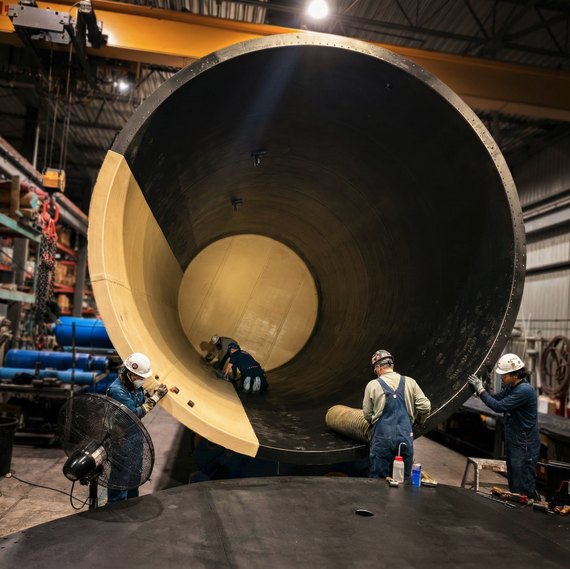
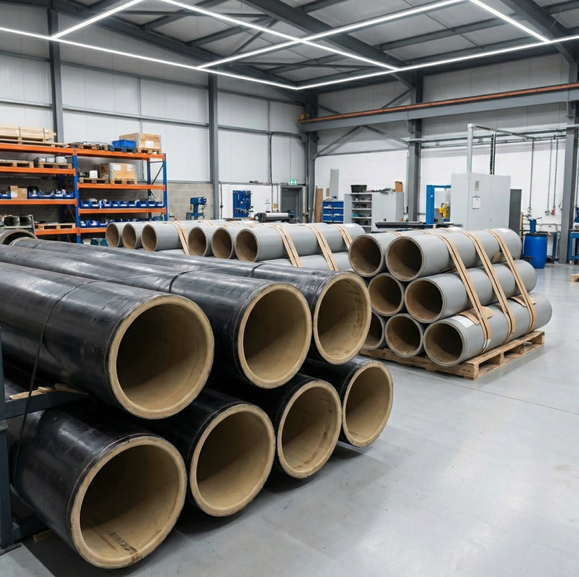
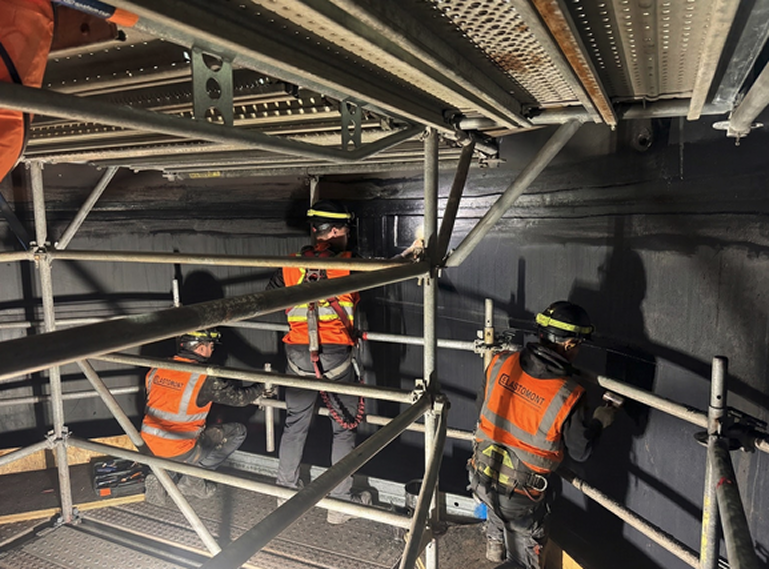
For over 35 years, Élastomont has been designing and installing rubber linings to protect tanks, vessels, piping, and industrial equipment from chemical corrosion, abrasion, and thermal degradation. Our solutions extend the service life of your installations by 10 to 20 years, reduce maintenance costs, and minimize production downtime. Complete service: surface preparation, application, vulcanization, and inspection—performed in our workshop or directly on your site.
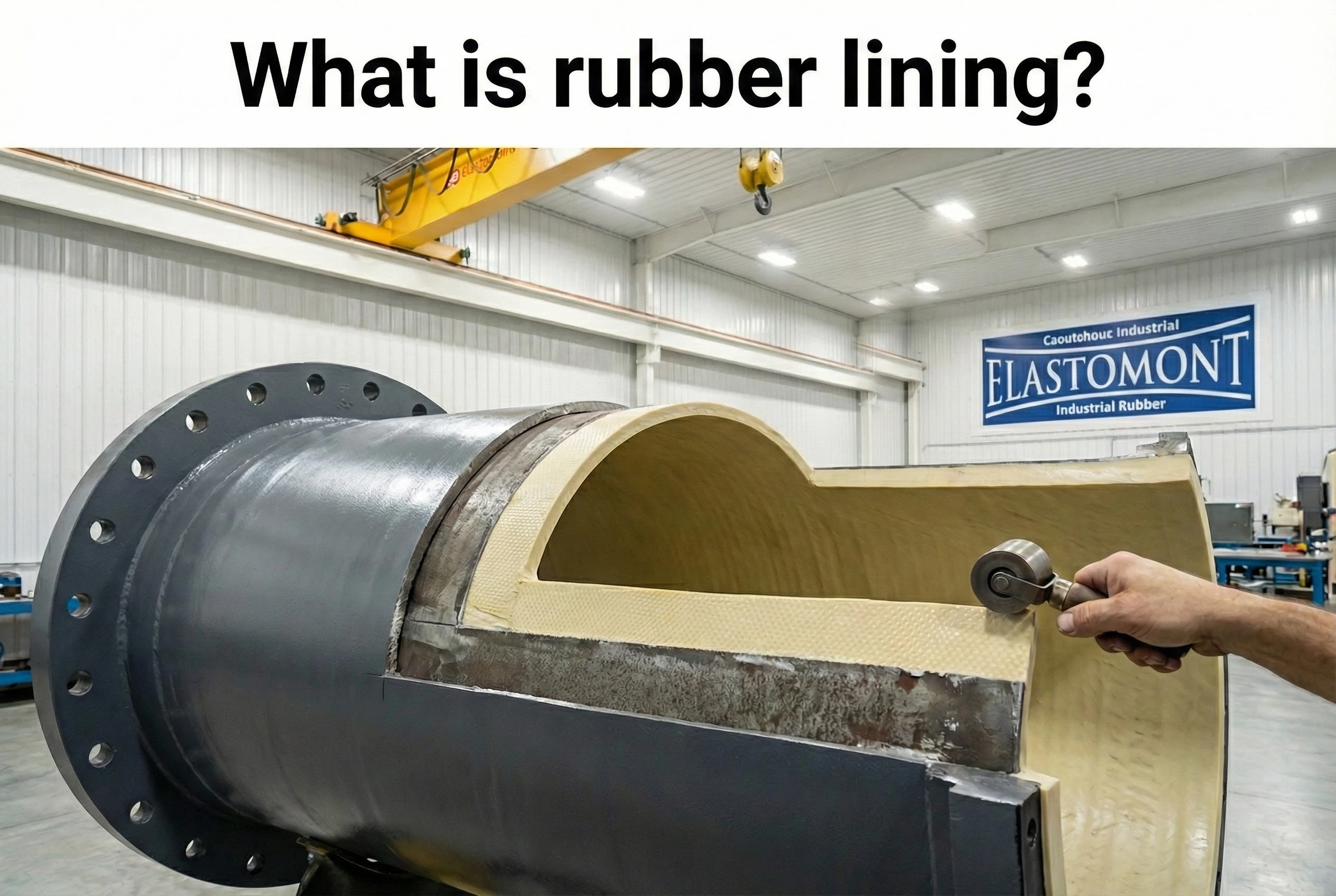
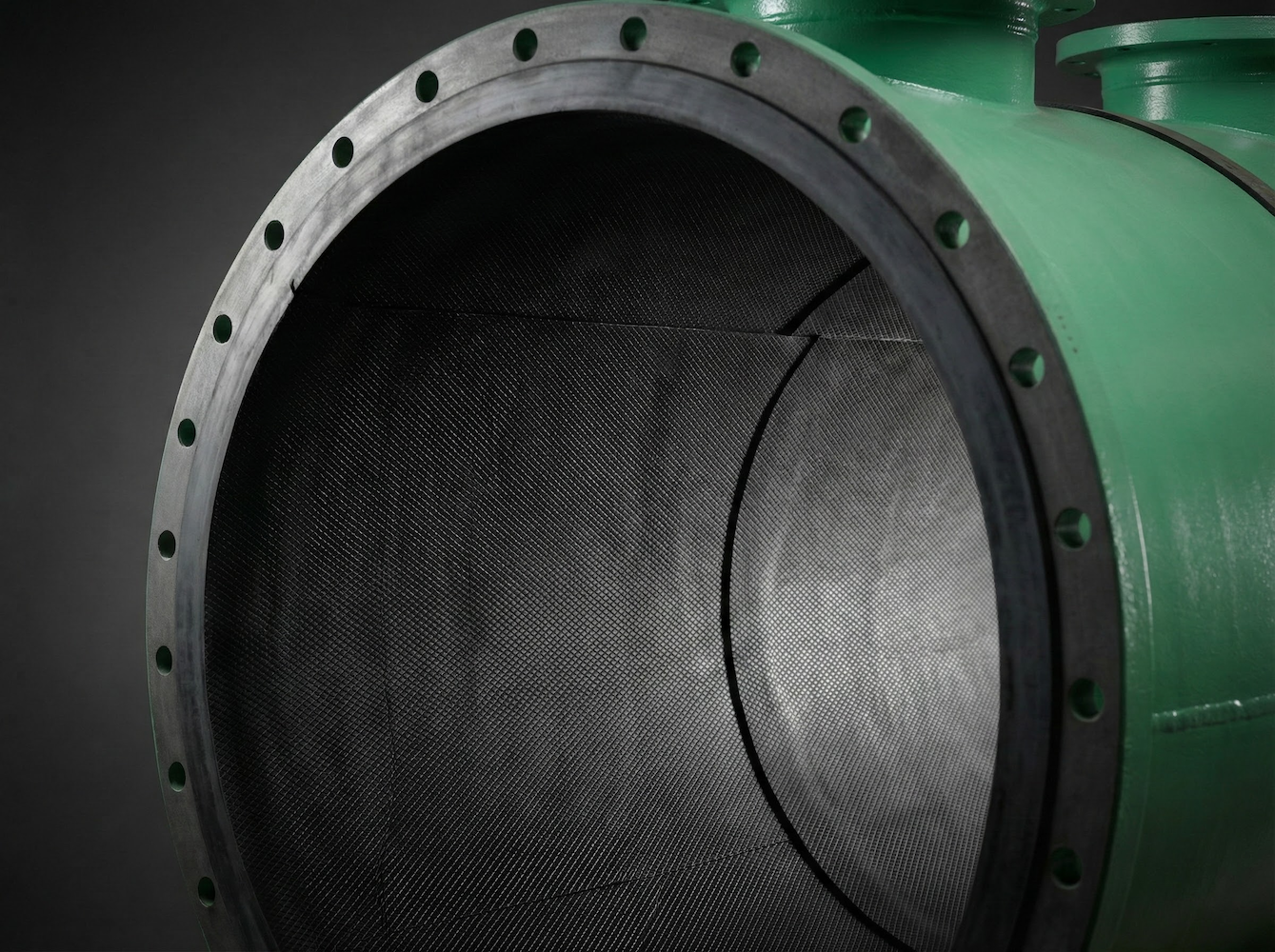
Rubber lining is an industrial process that applies a natural or synthetic elastomer membrane onto a metal structure. This layer adheres and forms a permanent protective barrier designed to safeguard your most critical equipment from the harshest environments.
Key advantages and protective properties:
Maximum chemical resistance: Reliable protection against acids, alkalis, salts, and corrosive solvents.
Superior wear resistance: Excellent resistance to abrasion, impact, and erosion from suspended particles.
Maximum protection, minimal noise. Metal resonates, rubber absorbs. Our lining doesn’t just last longer; it makes your operations quieter by cutting decibels at the source.
Total impermeability: A fully sealed barrier against liquids and gases, eliminating risks of leaks and contamination.
Beyond protection: a long-term investment
Extended service life: Increase asset longevity by 10 to 20 years, significantly reducing replacement costs and CAPEX.
Simplified, cost-effective maintenance: Unlike corroded metal surfaces, localized damage can be repaired quickly on-site, without replacing the entire lining.
Our Rubber Lining Specializations
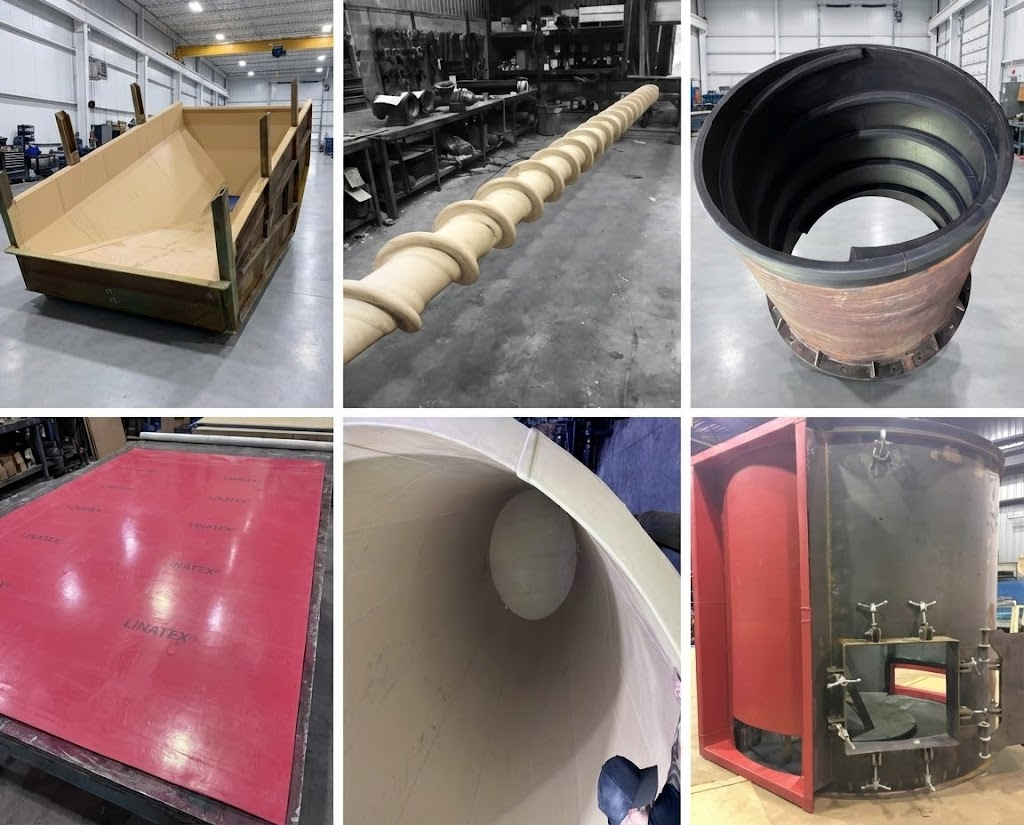
Elastomont delivers comprehensive rubber lining expertise for a full spectrum of critical industrial equipment, successfully addressing the unique technical challenges of each application:
The Rubber Lining Application Process: From Intake to Final Delivery
Every rubber lining project at Elastomont is executed following a strictly controlled protocol, adhering to recognized international standards and proven best practices. Our primary objective is to guarantee superior bond strength, optimal chemical and mechanical resistance, and maximum durability in even the most unforgiving industrial environments.
1. Material Reception & Incoming Inspection
Upon arrival, all rubber membranes, adhesives, and primers undergo a rigorous identification and inspection process.
Specification Verification: Strict checks on batch numbers, material thickness, and chemical formulations.
Storage Management: Controlled monitoring of storage conditions (temperature, humidity) and shelf-life expiration dates.
Full Traceability: We maintain complete records of every material batch assigned to your specific project for total accountability.
Substrate Surface Preparation
Surface preparation is a critical step for the performance of the lining.
Mechanical blasting by shot blasting up to degree SSPC-SP 5 (White Metal Blast Cleaning)
Creation of a controlled roughness favoring the mechanical anchoring of the rubber
Complete elimination of rust, oils, greases, contaminants, and residues
Control and recording of metal temperature and ambient humidity to ensure optimal adhesion conditions
Visual inspection and validation of the surface profile
3. Priming & Bonding System Application
An adhesion system adapted to the application is applied immediately after surface preparation to prevent recontamination.
Use of recognized industrial adhesives (e.g., Chemlok, Polycorp, Rubber Source)
Application in one or more layers depending on the type of rubber and the service environment
Strict adherence to drying times, temperatures, and ambient conditions
4. Installation of Rubber Membranes
Calibrated rubber sheets are then installed manually by specialized technicians.
Typical thicknesses: 3 to 12 mm, depending on abrasion, corrosion, and mechanical constraints
Precise cutting, adjustment, and positioning of the membranes
Careful rolling to eliminate all air bubbles and ensure uniform contact
Specific treatment of joints, fittings, flanges, and critical areas
5. Pre-Vulcanization Inspection
Before curing, a complete inspection is carried out to detect any anomaly before the final transformation of the rubber.
Visual inspection of adhesion and joints
Verification of thickness uniformity
Electrical continuity test (spark test) on the entire coated surface to detect defects, porosities, or discontinuities
Immediate correction of any identified anomaly
6. Vulcanization (Curing)
Vulcanization transforms the rubber into a permanent elastic membrane with final properties.
Hot vulcanization in an autoclave or by a controlled process, depending on the application
Temperature, pressure, and curing time precisely controlled
The most critical step in the process, determining the final mechanical and chemical properties
7. Final Inspection and Testing
After vulcanization, the part is subjected to a rigorous inspection to confirm the final integrity of the lining.
Complete visual inspection
Electrical continuity test (spark test) after curing to confirm the total absence of defects
Adhesion tests as needed
Verification of conformity to client specifications
8. Finishing, Protection, and Packaging
Once compliant, the part is prepared for delivery:
Final cleaning
Protection of coated surfaces
Packaging adapted for transport and handling
Technical documentation and project traceability
9. Delivery or On-Site Installation
Parts can be:
Delivered ready to install
Installed directly on-site by our specialized team, when required
Vulcanization Methods – Complete Expertise
Method
Description
Application
Advantages
Autoclave (pressurized steam)
Curing in a closed chamber 120–150°C, 3–5 bar
Removable tanks, pipes, shop-handled pieces
Uniform curing, maximum adhesion, precise control
Direct Steam Cure
Steam injected directly into equipment
Large, non-transportable vessels
Excellent thermal penetration, large volumes
Internal Pressure Boiling Water Cure
Equipment becomes a pressure vessel
Flanged tanks, reactors, columns
Internal heating, superior adhesion
Boiling Water Cure
Controlled boiling-water heating
Open tanks, thin structures
Gentle, uniform, safe heating
Chemical Cure
Chemical activation at ambient temperature (10–14 days)
On-site work, fixed equipment, joints
No heat required, ideal for field work
Cold Bonding
Pre-vulcanized rubber + adhesive
Repairs, touch-ups, maintenance
Fast, simple, ideal for emergencies
Compliance guaranteed: All methods follow NACE and ASTM standards with full documentation.
The choice of compound depends on your process, temperature, pH, and products in contact. Élastomont works exclusively with certified formulations from Linatex, Polycorp, Blair Rubber, Rubber Source, and American Biltrite.
Rubber
Primary Strength
Typical Applications
Natural (NR)
Severe abrasion, impacts
Mining, slurry, cyclones, hoppers
Chlorobutyl (CIIR)
Oxidizing acids, gas-tightness
Strong-acid tanks, chemical reactors
Bromobutyl (BIIR)
Acids/bases, high heat
Chemical treatment, galvanizing
Neoprene (CR)
Solvents, ozone, weathering
Petrochemicals, moderate steam
Nitrile (NBR)
Oils, hydrocarbons
Petroleum tanks, lubricants
EPDM
Steam, hot water, alkalis
Water treatment, alkaline chemistry
Ebonite (Hard Rubber)
Extreme concentrated acids
Galvanizing, HCl, concentrated H₂SO₄
Quality Control & Compliance
We implement rigorous quality control and full traceability to ensure compliance and reliability for every industrial rubber lining project.
Complete Traceability
Lot number for every rubber roll
Lab reports and certificates of conformity
Refrigerated storage of uncured rubber (preserves properties)
Continuous monitoring of temperature/humidity/dew point
Testing & Inspections
Spark testing (electrical defect detection)
Systematic thickness measurements
Adhesion tests per ASTM
Full photographic documentation
Standards Respected
NACE (National Association of Corrosion Engineers)
ASTM (American Society for Testing and Materials)
CNESST (health & safety)
Each project includes a full report: preparation, application, vulcanization, testing, and validation.
Industrial Applications
Rubber lining protects critical equipment while delivering performance and durability in every industrial sector:
By Industry
Mining & mineral processing: Cyclones, hoppers, chutes, slurry pumps
Industrial rubber lining requires advanced technical expertise and specialized infrastructure. Élastomont stands out by meeting the highest standards and delivering reliability, performance, and compliance for every project.
Proven Experience
Canadian leader in rubber lining with 35+ years of expertise
Hundreds of projects in demanding industries (mining, chemical, metallurgy)
Verified references with photos and reports
Partnerships with the top suppliers in the market
Mastery of All Vulcanization Methods
Autoclave, direct steam, chemical cure, and more
Documented control of temperature, pressure, and ambient conditions
Processes executed in strict compliance with NACE and ASTM protocols.
Certified Infrastructure
Refrigerated rubber storage
Environmental control (temperature/humidity/dew point)
WHMIS, confined space, and respiratory-protection trained
Traceability & Documentation
Lot tracking with lab sheets
Full photographic reports
NACE/ASTM conformity certificates
Complete technical dossier delivered to the client
FAQ – Rubber Lining
Rubber lining is the application of a rubber coating onto metal surfaces to protect them from chemical corrosion, abrasion, and heat. The rubber is vulcanized (cured) to create a permanent bond with the metal.
A properly installed and maintained lining typically provides 10–20 years of protection, depending on the environment, rubber type, and operating conditions.
Yes. Unlike corroded metal, rubber linings can be repaired locally using chemical cure or cold bonding, without replacing the entire lining.
Selection depends on chemicals in contact, process temperature, abrasion level, and pH. Our specialists analyze your application and recommend the optimal compound.
Butyl (IIR): Excellent tightness and general chemical resistance
Chlorobutyl (CIIR): Better resistance to oxidizing acids and heat
Bromobutyl (BIIR): Best thermal resistance (up to 130°C)
Both. We perform complete installations in our workshop and also travel across Québec, Ontario, and New Brunswick with certified mobile equipment.
Our application and inspection processes are executed in strict accordance with NACE and ASTM specifications. We provide detailed QC documentation and inspection reports to verify that all work meets these industry benchmarks.
Timelines vary by equipment size, complexity, rubber type, and curing method. Small tanks may take a few days; large projects may take several weeks.
Yes. We perform complete inspections with spark testing, thickness measurements, and condition evaluation.
Yes—upon request for food or pharmaceutical applications.


.png)