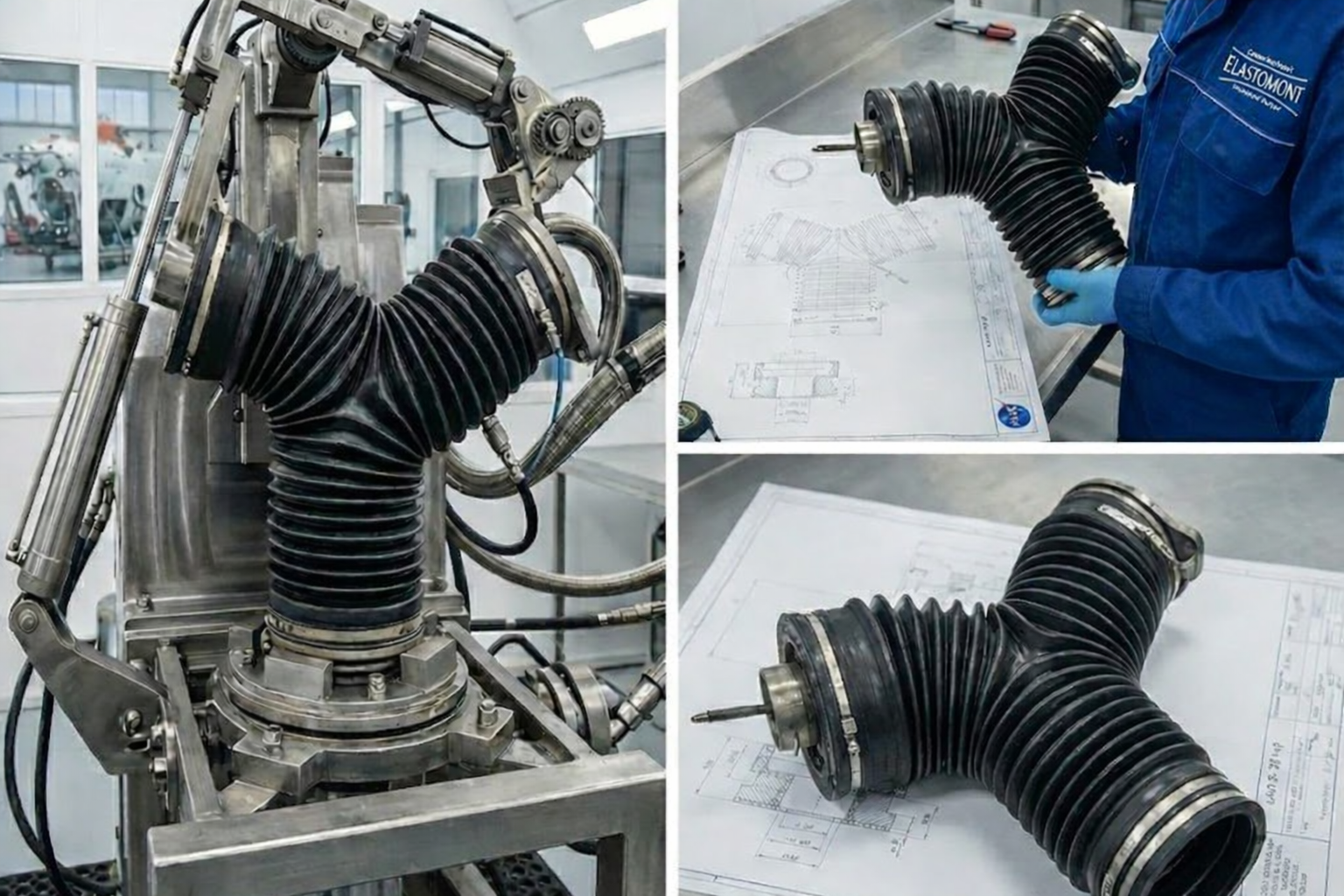
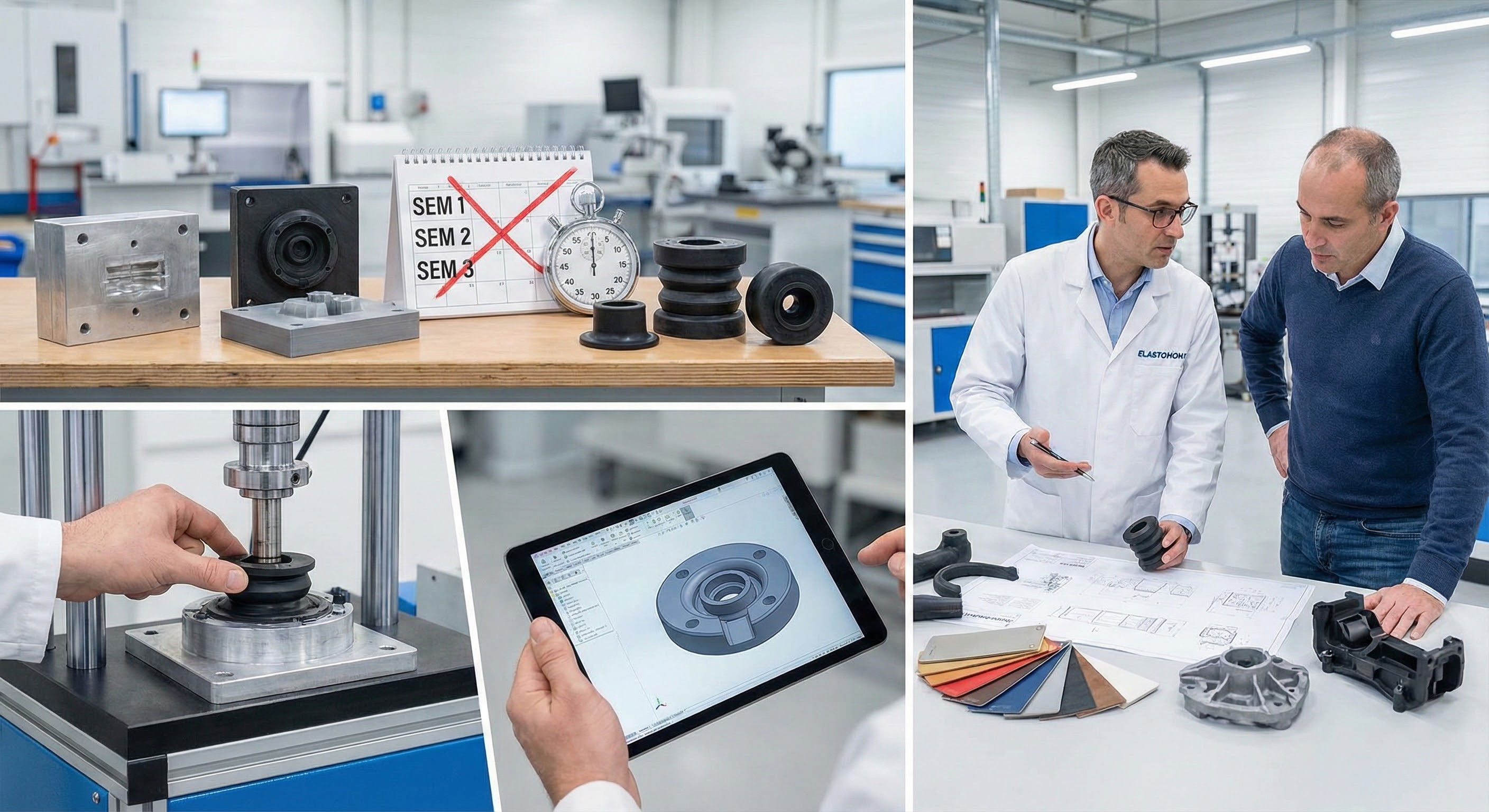
Photo collage illustrating the rubber prototyping process at Elastomont: rapid molds, CAD design on a tablet, part testing on a hydraulic press, and technical expertise consultation between engineers. Keywords: prototyping, rubber, Elastomont, molds, CAD, expertise.

Rubber Prototyping

At Élastomont, we accelerate your innovation with our fast and economical prototyping service. We develop low-cost temporary molds to validate your proof of concept, test your designs in real-world conditions, and adjust your specifications before investing in permanent production molds.

Prototyping of Industrial Rubber Parts

Our prototyping approach allows you to:

  • Rapidly validate the technical feasibility of your concept
  • Modify and optimize the design based on concrete tests
  • Reduce development risks and costs
  • Test parts in real-world conditions before mass production
Start your prototype today
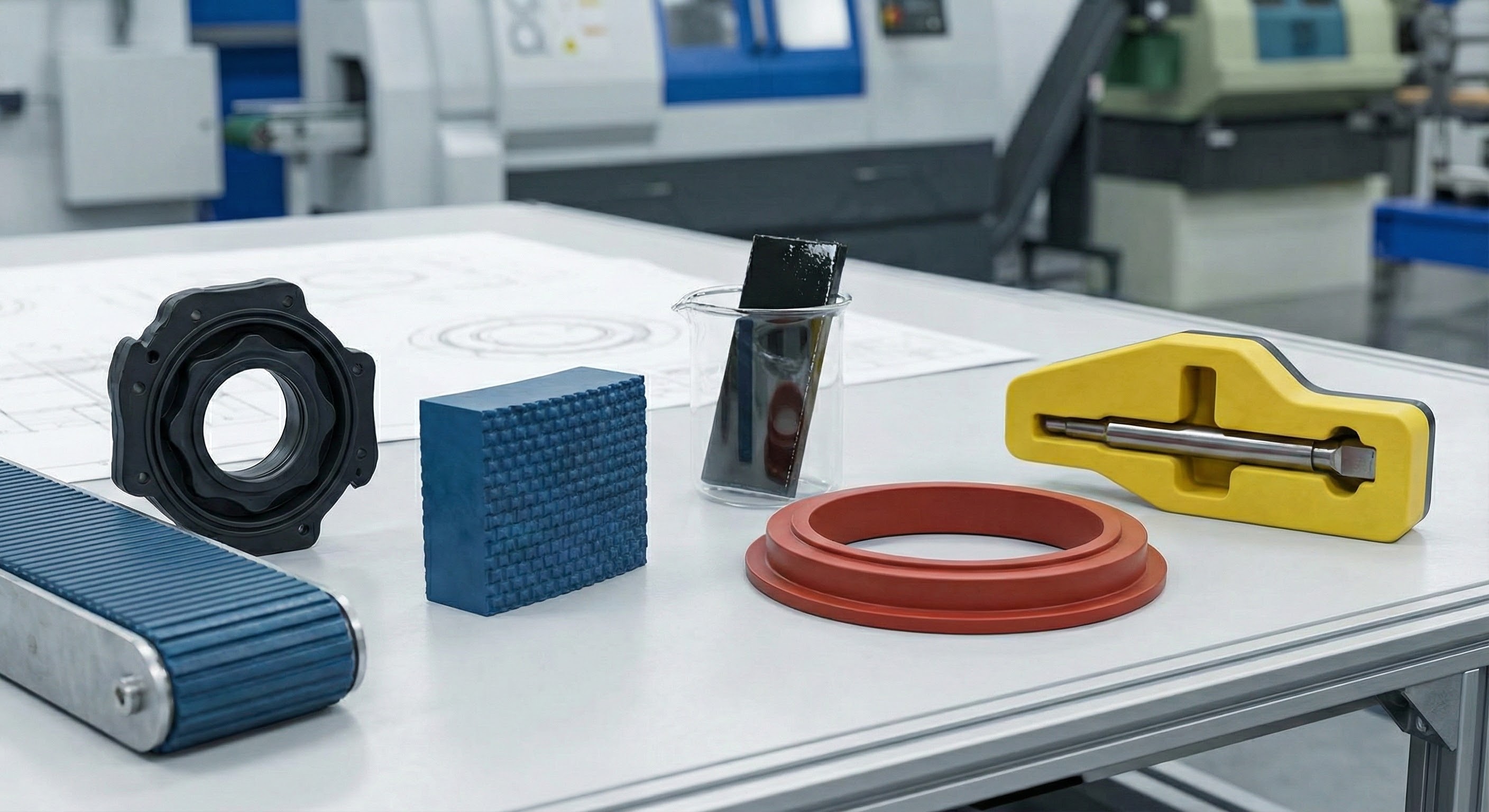
Assortment of various industrial prototypes, including rubber parts, seals, a conveyor section, and custom jigs, arranged on a workshop workbench with technical blueprints in the background."

Why choose prototyping with Élastomont?

  • Economical temporary molds: Experiment and iterate without major financial commitment.
  • Speed of execution: Our integrated facilities allow us to produce prototypes in a few weeks, not months.
  • Total flexibility: Each field test can lead to rapid adjustments to produce new iterations.
  • Technical expertise: Benefit from advice on materials, dimensions, assembly methods, and design optimization.

Our Prototyping Process

  • Consultation and analysis: We discuss your application, objectives, and constraints to define the best approach.
  • Temporary mold development: Designed for flexibility and speed rather than mass production.
  • Prototype production: Manufacturing of rubber parts intended for final use or a suitable substitute for testing.
  • Testing and validation: On-site tests in your real-world operating conditions with monitoring and adjustments.
  • Iterations and improvements: Rapid modifications to the molds to produce new versions until complete satisfaction.
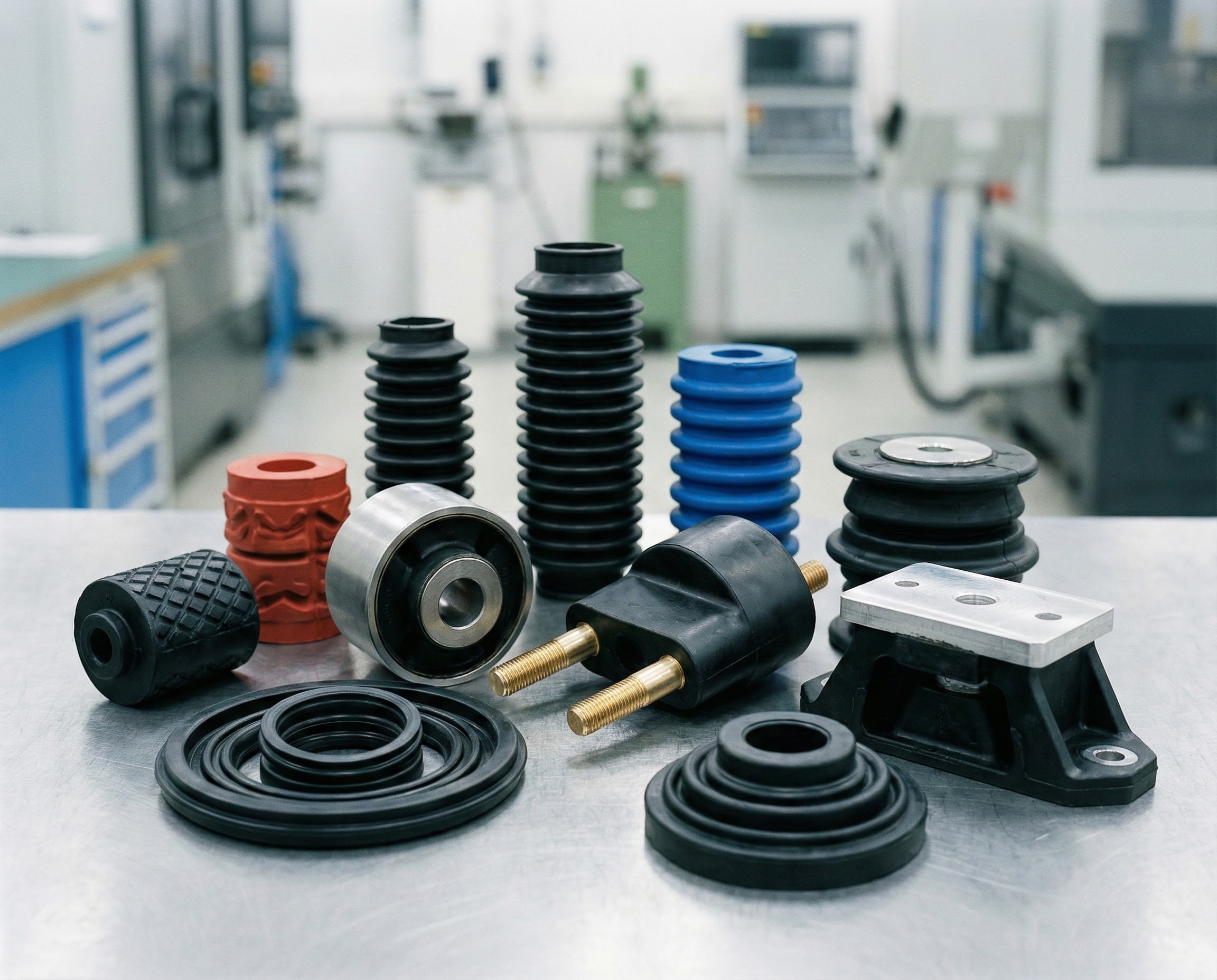
Photo of various molded rubber prototype parts, including anti-vibration mounts with metal inserts and bellows, produced by Elastomont.

Types of Prototypes Produced

  • Custom technical parts: Custom gaskets and seals, complex sealing elements, anti-vibration components, protections, and shielding
  • Coatings and linings: Samples for chemical testing, lining sections for installation validation, prototype protection systems
  • Assemblies and systems: Multi-component prototypes, complete assembly systems, validation of innovative concepts

Advantages of Prototyping Before Production

  • Risk reduction: Identify and correct design problems before investing in expensive molds.
  • Field validation: Test real performance in your operating conditions rather than relying solely on theoretical specifications.
  • Design optimization: Each iteration improves performance, durability, and often reduces manufacturing costs.
  • Development acceleration: Rapid prototyping significantly shortens the product development cycle compared to traditional methods.
  • Better decision-making: Concrete data to decide whether to move forward, modify the approach, or explore alternatives.
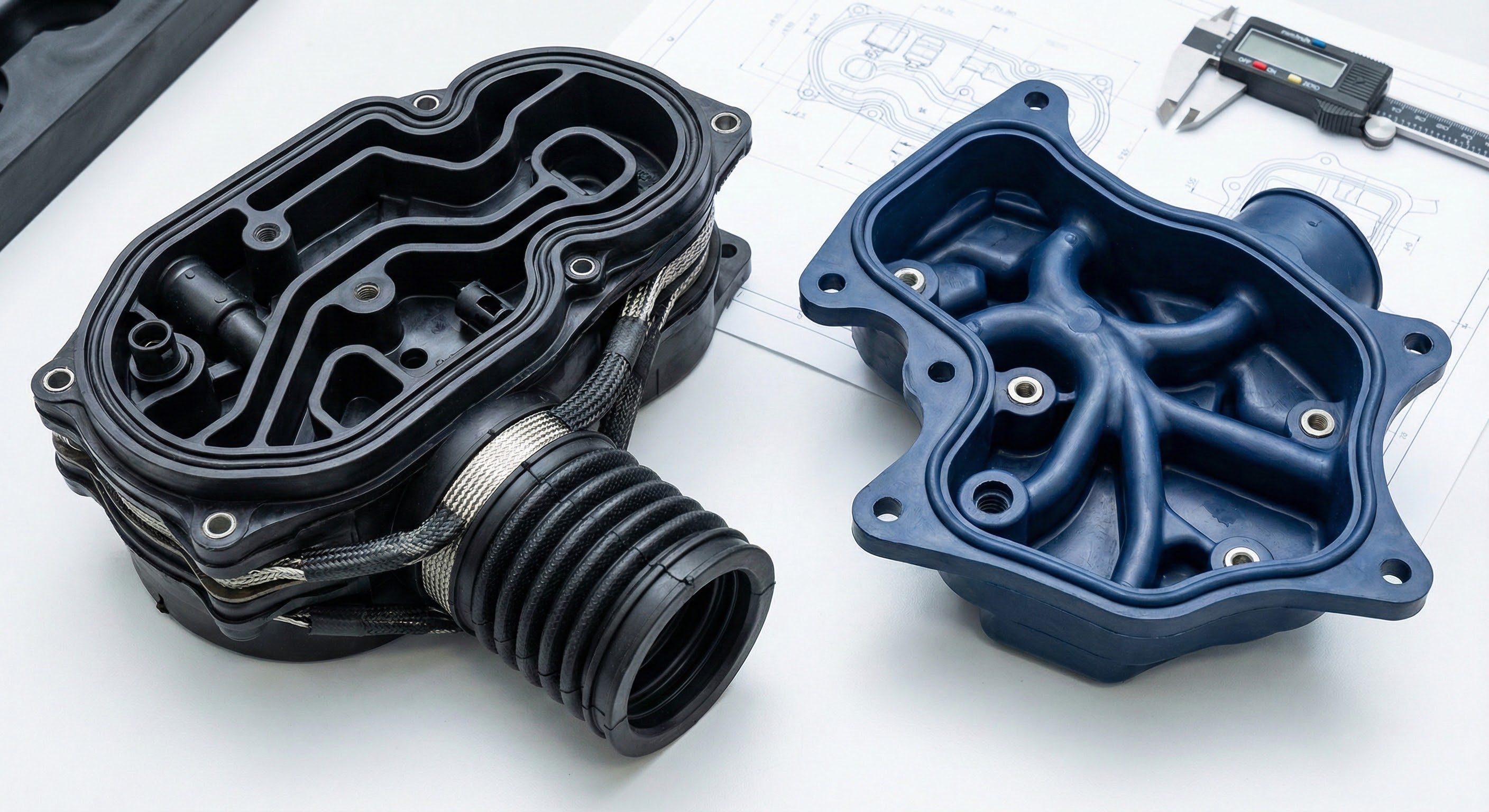
Photograph of two complex molded rubber prototype parts (one black with a bellow and metal braid, one blue with internal ribbing) developed by Elastomont, placed on technical blueprints alongside a digital caliper.
Workshop photograph showing a large grey molded rubber prototype part (bellows) from Elastomont, next to a stack of identical black production parts on a workbench with blueprints and a CNC machine in the background.

From Prototyping to Production

Once your prototype is validated and optimized:

  • Permanent production molds: We can develop the molds or collaborate with your suppliers.
  • Complete documentation: Validated specifications and procedures to facilitate production.
  • Internal or external production: Depending on your volumes and preferences, we ensure production or facilitate the transfer to other manufacturers.

Typical Prototyping Applications

  • New sealing systems for rotating equipment
  • Innovative anti-wear protections for conveyors
  • Resistant coatings for specific chemical applications
  • Sealing components for extreme environments
  • Custom protection solutions for unique equipment
  • Manufacturing of prototype parts for simulation and technical validation programs in the aerospace sector.
Elastomont – Manufacturing of rubber prototype components for simulation programs and technical validation in the aerospace sector.

FAQ - Prototyping

Costs vary depending on complexity, but our temporary mold approach is significantly less expensive than permanent molds. We provide detailed estimates after evaluating your needs.
Typically between 2 to 6 weeks, depending on the complexity of the mold and the availability of materials. We can accelerate the process for urgent projects.
Generally between 5 and 50 units, depending on the complexity of the part and the type of mold. This is sufficient for complete testing before mass production.
Absolutely. We can produce prototypes in different compounds to compare performance and identify the optimal material.
We analyze the results together and modify the temporary mold to produce an improved version. This is precisely the goal of prototyping: to iterate until the optimal solution is found.
Yes. Our experts remain available to discuss results, interpret observations, and recommend adjustments.
Contact us to discuss your project. We can share relevant examples while respecting the confidentiality of our clients.

Develop your prototype with our experts

ELASTOMONT At Élastomont, innovation meets resistance. Our custom rubber products are designed to withstand pressure and ensure the smooth operation of your business.

Develop your prototype with our experts

Call us